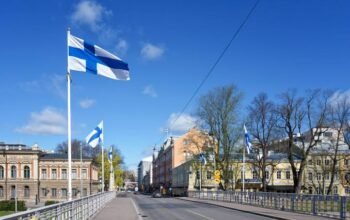
In the November 2025 Budget, Britain rewrote its gambling rulebook, capping online slots and adding a new statutory levy that overhauled its duties. The key question remains whether tighter state control protects players or simply pushes them into the black market. Around 750 kilometers away, Switzerland made its choice years ago. Famous for its guarded…
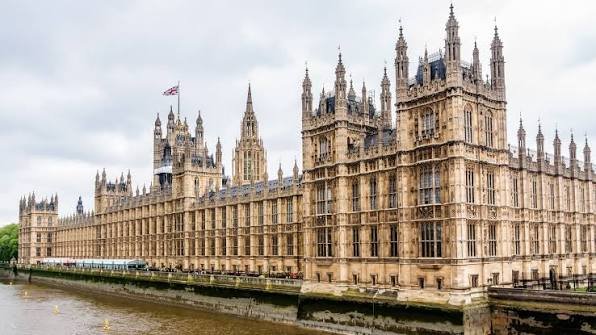
In the November 2025 Budget, Britain rewrote its gambling rulebook, capping online slots and adding a new statutory levy that overhauled its duties. The key question remains whether tighter state control protects players or simply pushes them into the black market.
Around 750 kilometers away, Switzerland made its choice years ago. Famous for its guarded approach, the country has fewer than nine million people, which helps make its highly regulated gambling sector manageable and effective. That model isn’t perfect, and it wouldn’t transplant neatly to the UK. It does, however, offer a useful mirror. Some of its ideas are worth stealing, and others are a warning.
A closed market, approved at the ballot box
The Swiss Money Gaming Act (Geldspielgesetz) took effect on 1 January 2019. Voters had backed it in a national referendum in June 2018, giving it a democratic mandate that British gambling legislation has never had. This democratic backing can inspire confidence in the model’s legitimacy and public support.
The principle is simple. Only operators with a Swiss presence may offer gambling to Swiss residents. Online casino games are restricted to the country’s licensed land-based casinos, which can extend their concession online. Lotteries and sports betting are reserved for the two state-backed lottery companies, Swisslos in the German- and Italian-speaking regions and Loterie Romande in the French-speaking west.
Two regulators split the work. The Federal Gaming Board (ESBK) oversees casinos and their online services. The intercantonal authority Gespa supervises lotteries and sports betting. A foreign bookmaker, however established it is in Malta or Gibraltar, has no route into the market.
Blocking the rest
To keep the market closed, Switzerland does something the UK has always avoided. It blocks unlicensed websites. Both regulators keep public block lists, and Swiss internet providers must stop customers from reaching any domain on them. Swiss courts have upheld the practice, including in a 2023 Federal Supreme Court ruling. As of the latest count, the casino regulator’s list alone includes more than 2,000 domains. This visible enforcement reassures the public that regulators are active.
The system has obvious gaps. DNS blocking is easy to get around with a VPN or a different DNS server. New domains appear faster than regulators can publish updates, and Swiss broadcaster SRF reported that adding a batch of sites to the list can take months. Critics also point out that a blocked page tells a determined punter very little about why the site is risky.
Even so, blocking changes the default. A casual Swiss user who searches for a bookmaker is far more likely to land on a licensed site than an offshore one. Much of a regulator’s job is exactly that.
Where the money goes
What convinces skeptics about the Swiss model is the clear visibility of where the money goes, such as contributions to the national pension fund and local sports clubs, which reinforces public support for regulation.
Swiss voters can see a direct line from a lottery ticket or an accumulator to their local club’s new pitch. That visibility helps explain why a restrictive law won a referendum comfortably. In Britain, gambling tax disappears into general Treasury revenue, and the new statutory levy funds research, prevention and treatment. Both are worthwhile, but neither is easy to see from the terraces.
The British approach: open door, rising costs
The UK went the other way. The Gambling Act 2005 created an open licensing market. Any operator that meets the Gambling Commission’s standards can apply, no matter where its head office is. That produced fierce competition, generous odds, and one of the world’s most innovative betting markets. It also produced the problems the reforms of the past few years set out to fix.
Remote gaming duty rose from 21% to 40% in April 2026, and online sports betting will move to a new 25% rate from April 2027. Bets on UK horse racing stay at 15%.
Industry bodies warn that higher costs will mean worse odds and fewer bonuses, which could drive players to unlicensed sites. That is exactly the scenario Switzerland’s blocking regime was designed to contain.
What the UK could learn, and what it shouldn’t
Make it visible: Switzerland has shown that people accept tighter rules when they can see the return.
The black market needs to be taken seriously: DNS blocking isn´t something Britain needs to copy, but stronger payment blocking or stricter action against unlicensed brands could close some gaps.
No choice?: Swiss bettors have little operators to choose from. The competition keeps the odds sharp, while state owned operators keep them low. A closed market also produces a cottage industry of guides explaining what is still allowed. Comparison sites such as MySportwetten.de/ch exist partly because Swiss bettors need help on where they can actually bet, and what the risks are.
Ask the public. The UK will never put gambling law to a referendum, and it doesn’t need to. The Swiss experience does suggest that rules made with the public tend to last longer than rules made around them.
Switzerland and Britain began from opposite ends
Both markets are completely different. One is built on consent, and the other on an open market and competition. Both now face the same pressure from offshore operators that ignore national rules. Neither has found a perfect answer.
The UK should blindly copy Switzerland or should become it in any way. But borrowing parts that work, like visible public benefit and a regulator that moves quickly, would be some things to have an eye on. On the other hand Britain should keep the competitive market that made betting in the UK what it is today. A small country with strict rules may not have the full answer, but it is asking the right questions.
2026-10-10 09:15:00